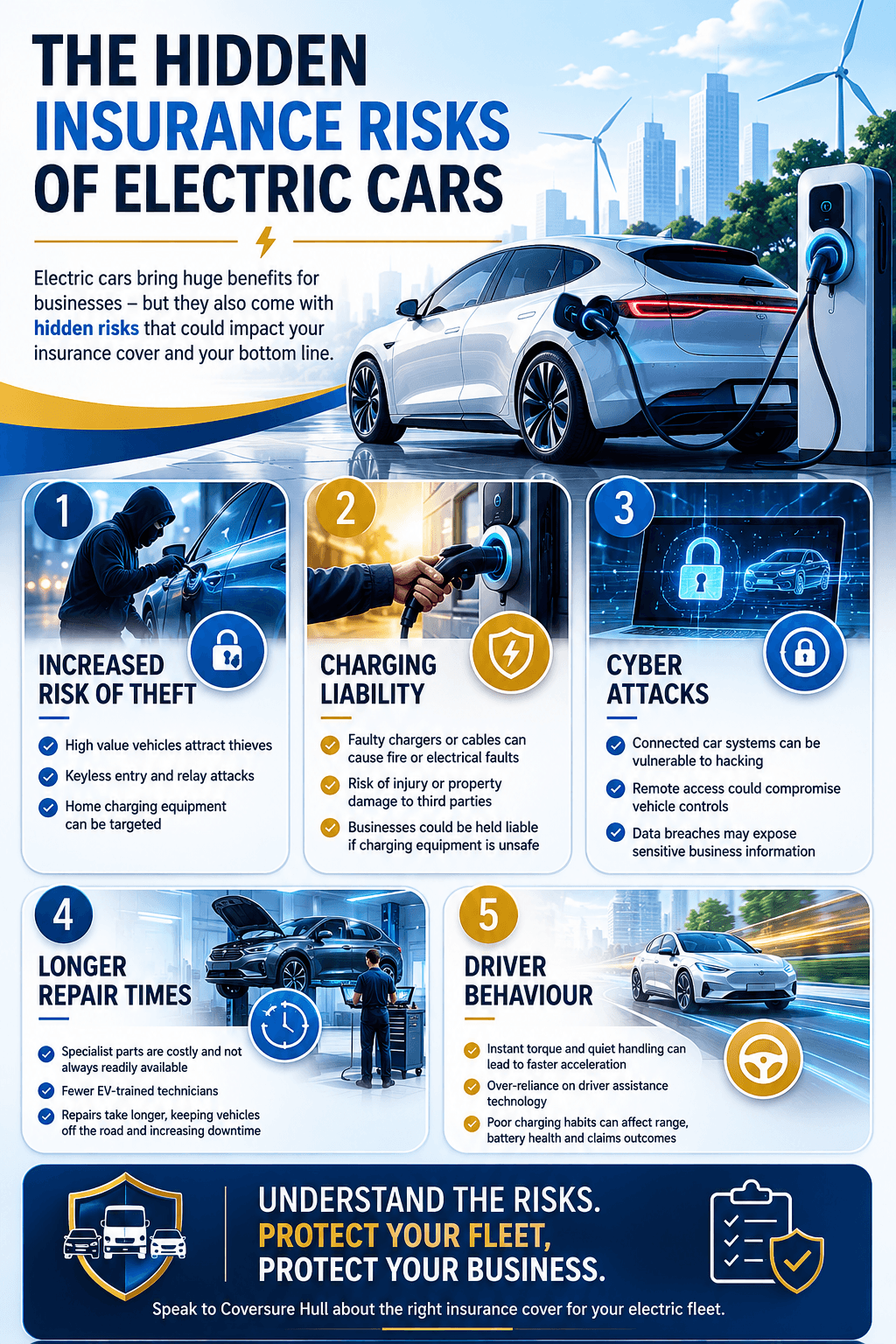
The UK’s transition to electric vehicles (EVs) is accelerating. According to the Society of Motor Manufacturers and Traders (SMMT), there are now over 2.1m EVs on the UK’s roads, 65% of which belong to commercial fleets. Commercial fleets have been the power behind the rise of EVs. Three years ago, we weren’t seeing any electric fleet insurance quote requests; now we’re getting several a day.
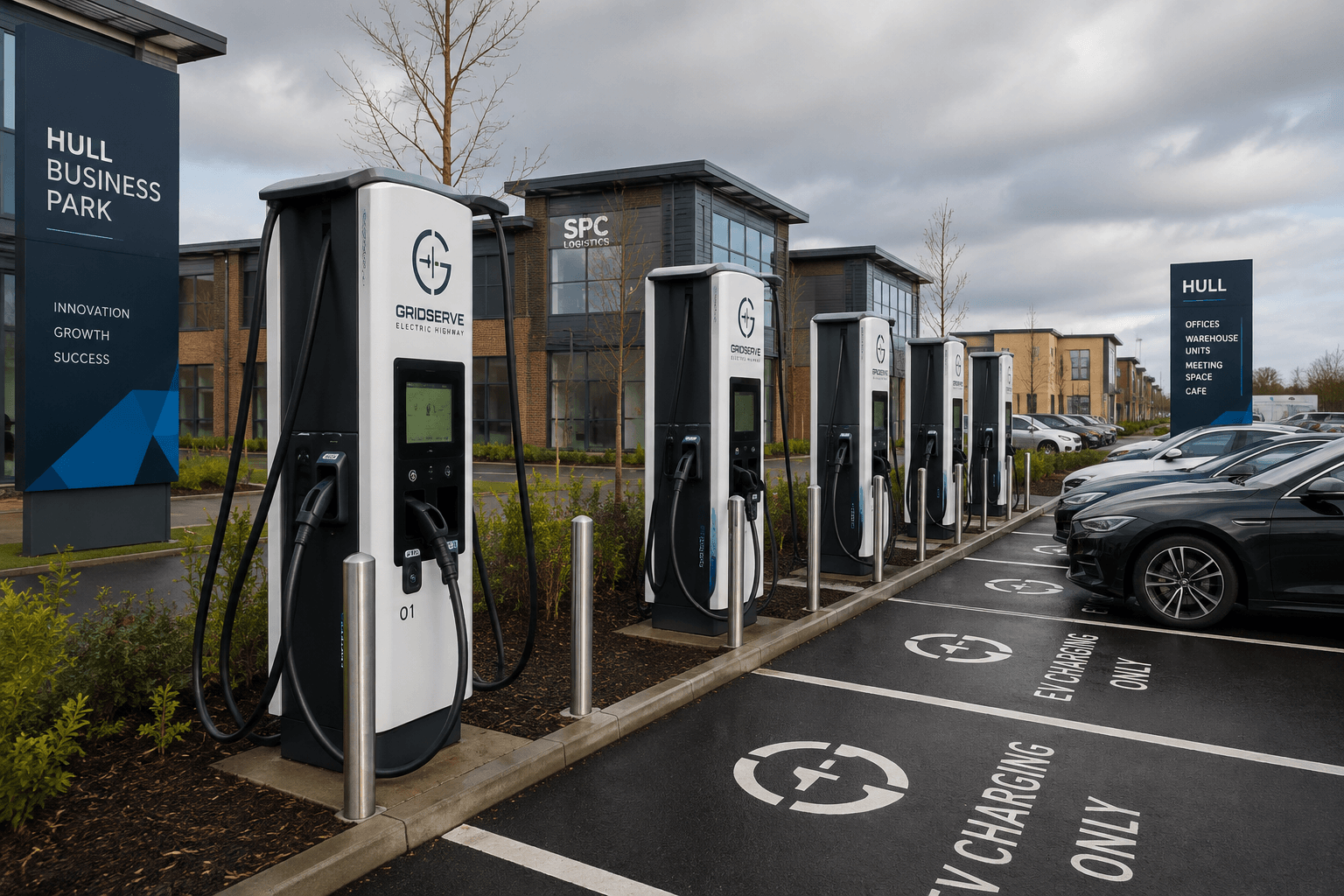
The rapid rise in the number of employees driving EVs has made many commercial property owners install EV chargers in their buildings. EV charging infrastructure adds value to potential users/tenants, not least as private chargers are so much cheaper than public charging points. Zapmap figures suggest that private chargers are up to 80% cheaper per kilowatt-hour and can cost as little as 9.5p per kWh.
Installing EV chargers at business premises has insurance implications. In our property insurance guide, we looked at EV charging insurance as part of the emerging property insurance review. While they are a great idea, those installing them in commercial buildings need to be aware of the need for EV charging point insurance and the risks they bring.
In this latest blog from Coversure, Andy Price Dip CII looks at these risks, details how electric vehicle infrastructure insurance can help, and offers tips on getting cheaper insurance. We hope it will be useful, but if you’d like some personalised, independent advice, then please get in touch. You can call our award-winning team on 01482 434343, get an electric vehicle infrastructure insurance quote, or request a callback.
What Is Electric Vehicle Infrastructure Insurance?
Electric vehicle infrastructure insurance is designed to protect EV charging equipment, including charging points and cables, from accidental damage, loss, theft, breakdown, and loss of revenue. It can also include protection for the employers’ and public liability risks associated with operating charging points. It can cover equipment in private homes, but most policyholders are commercial property owners and commercial landlords who’ve installed EV charging points.
Who Needs Electric Vehicle Infrastructure Insurance?
Anyone who has an EV charging point can get cover, and while many homeowners do take it out, most policies are held by commercial property owners or businesses, including:
- Commercial landlords who want to give their tenants charging facilities
- Commercial property owners who want to give their staff charging facilities
- Providers of public charging spaces, including local authorities and private EV charging firms
- Commercial landlords
- Owners of logistics parks and transport hubs
What Can Electric Vehicle Infrastructure Insurance Cover?
As it’s taken out as an extension to another policy, typically as part of commercial property insurance or business insurance, its scope will vary according to the policyholders’ needs. Most policies offer cover for:
- Damage or breakdown of charging stations, cabling, transformers, and grid connections
- Storm damage
- Malicious damage – including vandalism and damage incurred during an attempted theft
- Accident impact damage
- Flood damage
- Public liability insurance should someone be injured or their property damaged by equipment
- Employers’ liability insurance should cover an employee if they are injured or their property is damaged by equipment
- Engineering inspection insurance, which covers the cost of mandatory safety checks and financial protection against unexpected breakdowns, property damage, or legal non-compliance
- Business interruption insurance – if chargers are being used as a revenue earner or to support a business, by charging a fleet of company cars, for example, and they stop working, policy owners can claim for lost earnings and disruption
- Cyber insurance – smart chargers have an internet connection, making them vulnerable to cyber-attacks. This makes having cyber insurance in place a wise move
- Environmental liability insurance – covers the costs of clearing up pollution, decontaminating a site, and restoring the local environment after an incident. While issues like thermal runaway in lithium-ion batteries and charging fires are rare, they do happen and are expensive to clear up
- Legal expenses insurance – protects EV tower owners if they are sued by someone after an issue with one of their chargers
Why Do People Need EV Charging Insurance?
Because accidents, breakdowns, and thefts happen, and because standard commercial property insurance and business insurance won’t always insure chargers. Policies that do are often limited to damage, theft, and breakdown, and not all the risks I’ve outlined above.
What Equipment Can Electric Vehicle Infrastructure Insurance Cover?
- EV charging points
- Electrical infrastructure, including distribution boards, transformers, switchgear, cabling, electrical cabinets, power management systems, and metering equipment
- Battery energy storage systems (BESS) are becoming increasingly common, and insurance can protect battery units, inverters, cooling systems, battery containers, and monitoring systems
- Solar and renewable energy integration – commercial EV chargers are increasingly powered by renewable energy. Policies can now be extended to cover solar panels, battery storage, smart grids, and energy management systems
EV chargers are evolving fast. Megawatt chargers, commercial vehicle-to-grid packages that allow cars to feed power back to homes or the grid, and automated, computer-vision-guided robotic charging are all either here or coming soon. Insurers are keeping pace with these changes, but It’s important, from a compliance and cover perspective, to have the right policy in place. If you’d like some independent advice or would like to arrange cover, please call 01482 434343 or request a callback, and we’ll be happy to help.
What Doesn’t EV Charging Insurance Cover?
Exclusions vary from insurer to insurer, but the following will usually be excluded:
- Wear and tear
- Poor maintenance – including maintenance by an unqualified electrician
- Manufacturer defects
- Deliberate damage
- Undeclared modifications
- Gradual deterioration
- Cosmetic damage
- Faulty workmanship unless separately insured
- Equipment upgrades that the insurer isn’t aware of
How Much Does Electric Vehicle Infrastructure Insurance Cost?
Commercial electric vehicle infrastructure insurance costs between £200 and £1,500+ per year per tower. A lot depends on the size of the infrastructure, public access, the charging speed and security precautions. For domestic chargers, it’s between £3-£8 per month
How To Get Cheaper EV Charging Insurance?
Insurers will look favourably on people and businesses that have:
- Installed protective bollards around charging points
- Use accredited installers
- Carry out regular inspections and can show records of compliance
- Install CCTV and security lighting around chargers
- Use remote monitoring systems
- Install appropriate fire detection and suppression equipment
- Implement strong cybersecurity measures
- Low claims records
Case Study: How Coversure Helped A Business Park Owner Avoid Significant Losses Following A Charging Station Collision
The Client
One of our commercial landlord insurance clients decided to install 20 workplace charging points at his offices on the K3 Business Park. State-of-the-art rapid chargers were installed and proved popular with his tenants. Following our advice, he added comprehensive electric vehicle infrastructure insurance to his existing commercial property policy.
The Problem
One night, joyriders crashed into two of them before fleeing the scene. The towers were rendered unusable, and while the modular internal architecture meant the rest could remain in use, he was still facing a 10% drop in charging revenues and frustration from his tenants.
The Solution
One of the towers needed to be replaced, while another needed significant repairs. The pavement was lifted to fix the underground cabling, so the total cost exceeded £60,000, and the chargers would be out of action for three weeks, with no access to the ones on either side. This led to significant business interruption and lost revenues.
The cover we arranged allowed him to quickly instruct a team of specialist engineers to repair the damage and get the chargers back in action quickly. It also covered the lost charging revenue. Without the cover we had recommended, he would have faced a loss of over £75,000.
Electric Vehicle Infrastructure Insurance FAQs
What is electric vehicle infrastructure insurance?
Electric vehicle infrastructure insurance is designed to protect EV charging equipment, including charging points and cables, from accidental damage, loss, theft, breakdown, and loss of revenue
Who needs electric vehicle infrastructure insurance?
Some homeowners will take it out, but it’s mainly taken out as part of a business, commercial landlord, or commercial property insurance policy. This is because business owners need liability cover, amongst others
How much does electric vehicle infrastructure insurance cost?
Commercial electric vehicle infrastructure insurance costs between £200 and £1,500+ per year per tower. A lot depends on the size of the infrastructure, public access, the charging speed, and security precautions. For domestic chargers, it’s between £3-£8 per month
Does commercial property insurance cover EV charging points?
Not always. Standard commercial property policies may not automatically include charging equipment or associated electrical infrastructure
Does home insurance cover EV charging points?
Usually, as it’s counted as part of the building, but it’s worth checking with your broker if you’re having one installed
Is EV charging infrastructure covered while it’s being installed?
Construction projects typically require contractors’ all-risks insurance or a specialist installation policy to protect charging equipment during installation
Can EV charging stations increase property insurance premiums?
Yes, particularly where installations are large or include battery storage. In commercial properties, they will almost always push premiums up
Can it cover public and employers’ liability issues?
Yes, as it’s a policy extension, it can be added to an employers’ or a public liability policy, or be added to a commercial property insurance policy
Does EV charging insurance cover cyber-attacks?
No, but it can be added to a cyber insurance policy to extend cover
Are battery storage systems insured?
Yes, Battery Energy Storage Systems (BESS) can be insured, although they may require specialist underwriting due to the additional fire and technical risks they present
Can landlords insure chargers used by tenants?
Yes, commercial EV charging insurance can be arranged for charging points provided for tenants, employees or visitors
Is flood damage covered?
Flood damage may be covered where flood is an insured peril under the property policy, but it’s not automatic
Like Some More Help?
If you’d like some personalised, independent advice about getting the electric vehicle infrastructure insurance that’s right for you, then please get in touch. You can call us on 01482 434343, get an electric vehicle infrastructure insurance quote, or request a callback.
Andy
About The Author
Andy Price Dip. CII is the founder and Managing Director of the Coversure Hull Group, one of the UK’s leading independent property insurance brokers. The holder of the Diploma in Insurance, Andy has over 25 years of fleet and property insurance experience, and he and his team are trusted by thousands of UK commercial property owners who have rated the team as ‘Exceptional’ on feefo, with a 4.9/5 rating.