What Is Renewable Energy Property Insurance? A Guide for UK Commercial Property Owners
The commercial property market is changing fast, and so is commercial property insurance. There’s been a renewed focus on the environmental friendliness of commercial properties, and more commercial property owners are taking out renewable energy property insurance. Major announcements include the Department for Energy Security and Net Zero’s (DESNZ) announcement that rented non-domestic buildings over 1,000 square metres must reach an Energy Performance Certificate (EPC) rating of B by 2031, which has concentrated owners’ minds on emissions and renewable energy.
Traditionally, commercial property insurance wasn’t too concerned with energy ratings, focusing instead on the building’s risks. As renewable energy sources such as solar panels, heat pumps, electric vehicle charging points, and battery storage systems have become more common, owners are taking out renewable energy property insurance to protect their premises. But what is renewable energy property insurance and why do commercial property owners need it? In this renewable energy property insurance guide for commercial property owners, insurance expert Andy Price, Dip. CII, tells you everything you need to know about this increasingly important cover.
We hope this guide will be useful, but if you’d like personalised, independent advice, then please get in touch. You can call our award-winning team on 01482 434343, get a renewable energy property insurance quote, or request a callback.
Why Do Commercial Property Owners Need Renewable Energy Property Insurance?
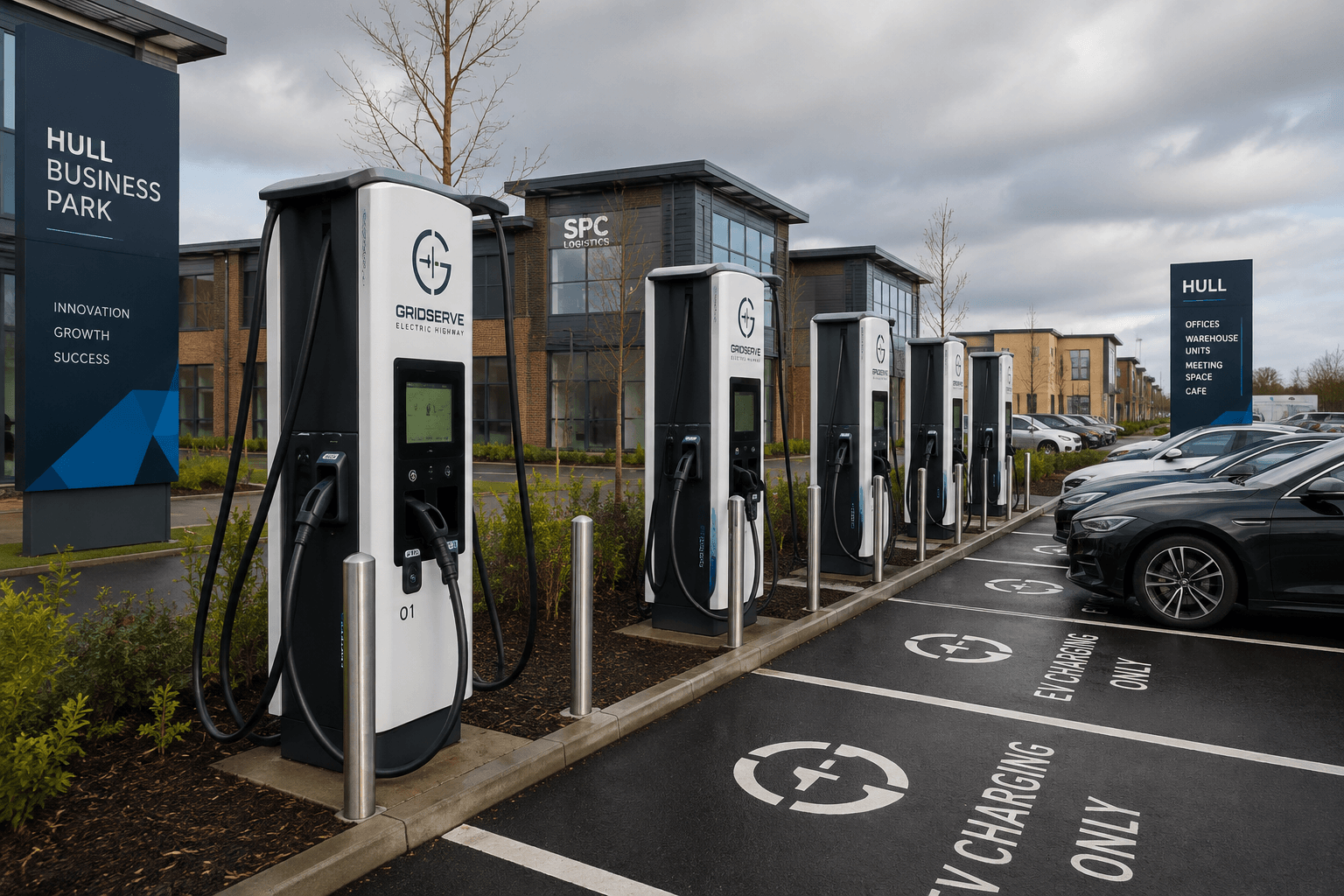
I’ve been asked this question a lot over the past couple of years. In fact, it’s one I asked an underwriter when I renewed a policy for one of my landlord insurance clients. He’d added EV charging posts to his carpark for tenants to use, which I had to declare as part of the renewal. The underwriter told me insurers were wary of the extra risks these brought and told me the client needed a renewable energy property insurance element to the cover.
Since then, we’ve become used to asking if they’ve installed renewable energy facilities and why they need cover. Breakdown, public liability, and fire risks are all significantly increased by having them on site, and the costs associated with them can be huge.
What Is Renewable Energy Property Insurance?
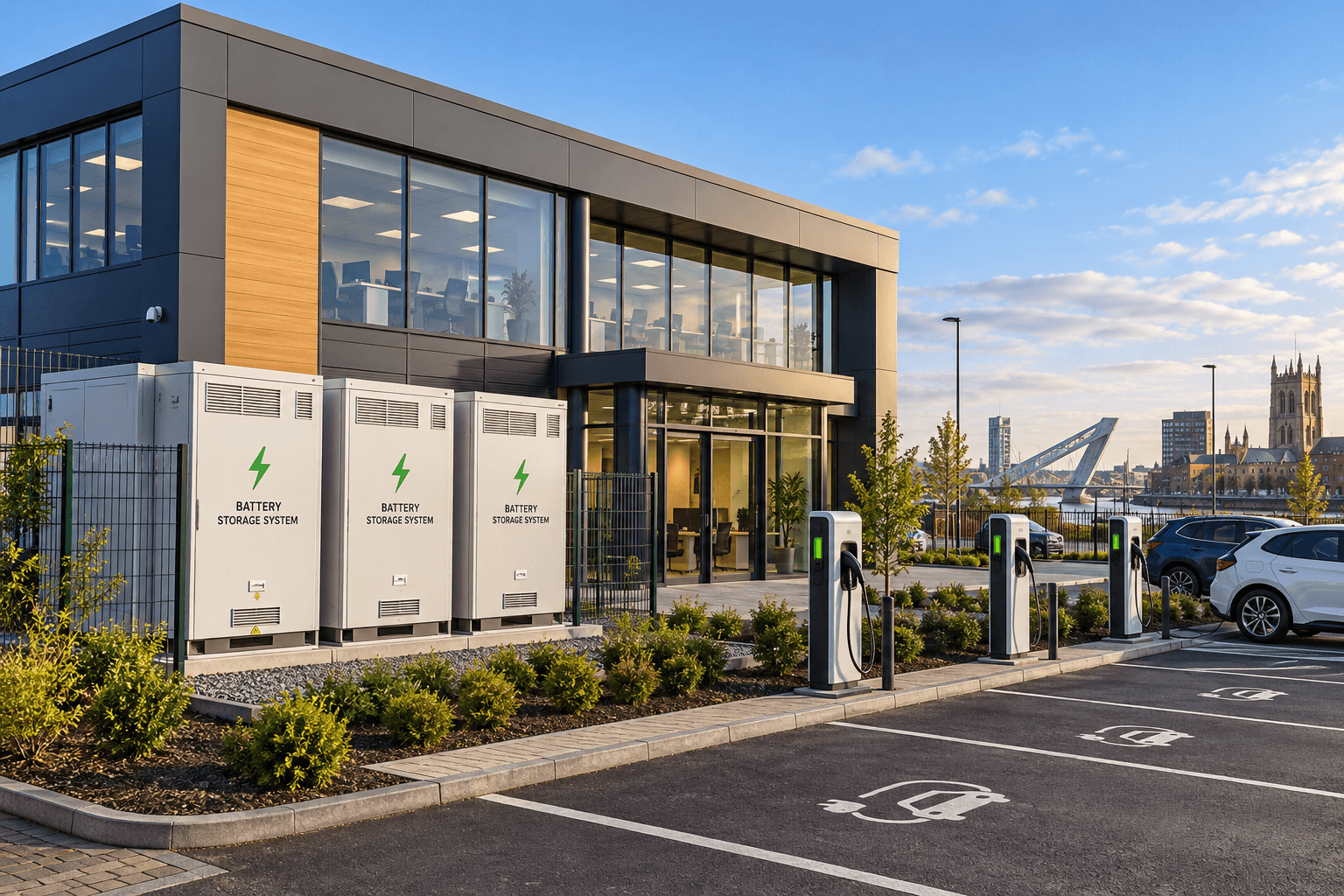
Renewable energy property insurance isn’t a single, standardised policy; rather, it’s an extension to commercial property insurance that covers things like battery storage systems, solar panels, EV charging points, and heat or air pumps. Cover usually extends to breakdown, accidental damage, power surges, and theft – a major problem when it comes to things like heat pumps. As they’re external, they’re easy to remove, and as they cost up to £15,000 each, they’re an attractive target for thieves.
What Can Renewable Energy Property Insurance Cover?
As well as the risks I’ve outlined above, a policy can provide cover against:
- Fire
- Lightning
- Storms
- Flooding
- Theft
- Vandalism
- Accidental damage
In terms of risks, it can cover:
- Equipment – against theft, breakdown, accidental damage, malicious damage, lost energy revenue and charging revenue
- Public liability – members of the public tripping over EV charging cables, property being destroyed in a fire following a power surge in a battery storage setup, and solar panels being blown off roofs in a storm and damaging parked cars below are just some of the public liability issues associated with renewable energy installations. Public liability insurance can be extended to cover these risks as part of renewable energy commercial property insurance
- Landlord’s liability – which offers landlords cover against claims for financial losses, third-party property damage and injury, and legal defence costs and compensation awards
- Business interruption – Broken or stolen solar panels could leave the building without power, while a battery storage fire could force it to close temporarily. Business interruption insurance will cover lost income until the premises are fit for occupation
- Tenant relocation costs – as part of a commercial landlord insurance policy, you’re likely to be financially protected against the cost of providing tenants with alternative cover. So, if your building does become unusable following an incident with a renewable energy device, you’ll be covered
- The costs of removing debris and site clearances after a fire or an explosion – this can cover repairing roofs or mounting structures, replacing electrical connections, installing new equipment and testing and recommissioning systems
Who Needs Renewable Energy Property Insurance?
Owners of commercial property which have renewable energy systems installed in/on the property, or in the carpark/immediate surroundings. It’s particularly useful to commercial property owners who make money from their equipment by letting members of the public charge their cars or selling energy generated by solar panels back to power companies.
Which Systems Can Be Insured?
Commercial renewable energy insurance can cover several types of equipment, including:
- Solar panels on roofs
- Solar carports
- Solar farms – where panels are mounted on the ground
- Heat pumps
- Air and ground source pumps
- Wind turbines – those mounted on the top of buildings and on masts
- Electric vehicle charging posts – you can find out more about this in our Guide to Electric Vehicle Infrastructure Insurance for Commercial Property Owners
- Battery storage systems
- Biomass digesters
- Renewable energy controls
- Inverters, mounting systems, cabling and electrical connections
In time, we’ll likely cover things like hydrogen storage and filling points too, but these currently require highly specialised protection. If you have a specific piece of equipment in mind, please call 01482 434343, and we’ll be happy to discuss your needs.
What Can’t Be Insured?
Most insurers won’t cover:
- Claims arising from faulty installation
- Claims arising from DIY repairs
- Poor/lack of maintenance
- Wear and tear
- Deliberate damage
Are Renewable Energy Systems Covered by Commercial Property Insurance?
Yes, some renewable energy installations can be covered by commercial building insurance, but some equipment and associated risks aren’t. Insurers may agree to cover permanently installed items, including heat pumps and solar panels, but not large installations such as EV charging posts and battery storage systems.
Before installing systems, it’s best to talk to your broker to confirm:
- If the equipment is included in the policy.
- If it’s insured on a full replacement value or indemnity value, the current value of a used item
- Is the cost of installation work covered
- Is machinery breakdown included
- Is business interruption/loss of revenue covered
- Are there specific safety requirements, such as whether maintenance needs to be done by a qualified specialist or can an in-house team deal with it
- Whether the installation changes the property’s premium, as the overall value and risks have increased, and if the policy’s excess also rises
What Are the Biggest Renewable Energy Property Insurance Risks?
Insurers will focus on the following risks:
- Fire and electrical faults – electrical installations always bring risks, including battery storage systems that can lead to thermal runaway, causing intense fires and difficult firefighting conditions. Insurers are likely to want to know about the safety precautions in place, such as fire separation, monitoring systems and emergency procedures
- Storm damage – climate change has made our weather more extreme, and roof-mounted solar panels, wind turbines, and external heat/ground source pumps can be damaged/cause damage in storms
- Theft and vandalism – thefts of equipment are rising, as are reports of vandalism at weekends and at night. An insurer may want to know if you have security measures in place
- Mechanical and electrical breakdown
- Underinsurance – commercial property underinsurance affects as many as 79% of premises according to Aviva. Adding equipment can increase the property’s value and make the underinsurance issue worse. If you’re adding equipment, it’s important to ask your broker for a revised valuation of the property
- Cyber and connected-system risks – most of this equipment is online and can be hacked. Cyber-crime and cyber insurance are giving insurers serious headaches, and they may want to know how robust your systems are and if there’s a firewall between the equipment and the business’s main IT system
Who Is Responsible For Insuring Renewable Equipment On A Commercial Property?
This is tripping a lot of people up, as the question of who owns the equipment and who’s liable isn’t always clear. If a tenant gets permission to install equipment from the landlord, then it’s up to the tenant to get cover. If the landlord provides it, then it’s down to them. If a third party is renting space, say for solar panels on the roof or a turbine in the grounds, then it’s the equipment provider who needs to take out the insurance.
It’s important to follow this checklist before installation:
- Who owns the equipment?
- Who is responsible for maintenance?
- Who receives electricity generation/charging income?
- Who is responsible for any public liability issues?
- What happens if equipment damages the building?
- Who pays for removal or replacement of equipment and reinstallation costs?
- What happens when the lease or energy agreement ends? Who is responsible for the removal of equipment and making good any damage
How Much Does Renewable Energy Property Insurance Cost?
The annual cost of renewable energy property insurance generally ranges from 0.2% to 0.8% of the total project. The cost depends on the equipment, property and insurance protection required. Insurers will likely consider:
- Equipment value
- Technology type – solar panels, heat/air/ground source pumps and battery storage present different risks
- The property’s construction – roof materials, building layout and fire protection can influence underwriting.
- Its location – flood risks, subsidence, and proximity to other building/roads may affect premiums
- Installation – insurers may need evidence of professional installation and relevant certifications
- Maintenance and inspection schedules
- Claims history – particularly in relation to similar installations
- Policy elements – breakdown, business interruption, liability levels and specialist extensions can increase premiums
- Policy excess levels – higher excess may reduce the premiums
For commercial landlords, it is often sensible to review renewable energy cover alongside the wider property insurance programme.
Seven Ways to Reduce Renewable Energy Property Insurance Risks
- Speak to your insurance broker before installing equipment – they can advise you as to the insurance risks and ways you can reduce your premiums. If you’d like some independent advice, please call us on 01482 434343
- Use professional, fully trained installers – get them to share details of their qualifications and keep the installation certificates, design information and commissioning documents
- Maintain the equipment and stick to the manufacturer’s service recommendations
- Review your fire protection plans – this equipment can raise the chances of a fire significantly, so make
- Check the building’s reinstatement value to ensure you’re not underinsured
- Clarify ownership and liability
- Review cover regularly – tell your broker when you come to renew of any new equipment or changes in the equipment that’s been installed
Renewable Energy Property Insurance FAQs
- Is renewable energy property insurance compulsory in the UK?
There is generally no universal legal requirement to purchase a standalone renewable energy property insurance policy. However, lenders, landlords, lease agreements and commercial contracts may require specialist insurance. Commercial property owners should also consider their wider legal and contractual responsibilities.
- Are solar panels automatically covered by commercial buildings insurance?
No. Some insurers include permanently installed solar panels, while others require the equipment to be declared or specifically insured. Owners should confirm the applicable cover, sums insured and exclusions before installation.
- Does renewable energy property insurance cover battery storage?
Yes, battery storage systems may be covered under suitable property or specialist renewable energy insurance. However, insurers may require detailed information about battery technology, location, fire protection and maintenance. Coverage should be confirmed in writing.
- Does renewable energy insurance cover equipment breakdown?
Equipment breakdown is not automatically included in all property policies. Separate machinery breakdown insurance or an appropriate extension may be required. Wear and tear and gradual deterioration are commonly excluded.
- Can renewable energy insurance cover lost electricity generation/charging income?
Yes, many policies or business interruption extensions can cover specified losses of generation income following an insured event. Cover depends on the policy wording, insured causes of loss, waiting periods and financial limits.
- Will installing renewable energy equipment increase my buildings insurance premium?
Probably, as they will increase the property’s insured value and introduce additional risks. The effect on premiums depends on the equipment, property characteristics, safety measures and insurer.
- Do landlords need to insure renewable energy equipment installed by tenants?
Responsibility depends on ownership, lease terms and contractual arrangements. Landlords should establish who owns the equipment, who must insure it and who is responsible if it damages the building.
- Can renewable energy equipment be insured during installation?
Potentially, but operational property insurance may not provide adequate protection during installation. Contractors’ all-risks insurance, installation cover or other appropriate arrangements may be necessary.
- Does renewable energy property insurance cover cyberattack?
Not automatically. Cyber-related losses may be excluded from standard property insurance. Businesses using connected renewable energy systems should consider cyber insurance.
- Can renewable energy insurance be added to an existing commercial property policy?
Often, yes. Some insurers can extend existing property insurance to include renewable energy installations. More complex or higher-value systems may require specialist cover.
Like Some More Help?
If you’d like some personalised, independent advice about getting the electric vehicle infrastructure insurance that’s right for you, then please get in touch. You can call us on 01482 434343, get a commercial property renewable energy infrastructure insurance quote, or request a callback.
Andy
About The Author
Andy Price Dip. CII is the founder and Managing Director of the Coversure Hull Group, one of the UK’s leading independent property insurance brokers. The holder of the Diploma in Insurance, Andy has over 25 years of fleet and property insurance experience, and he and his team are trusted by thousands of UK commercial property owners who have rated the team as ‘Exceptional’ on feefo, with a 4.9/5 rating.